Salman field creates $1.2b revenue in 2 years
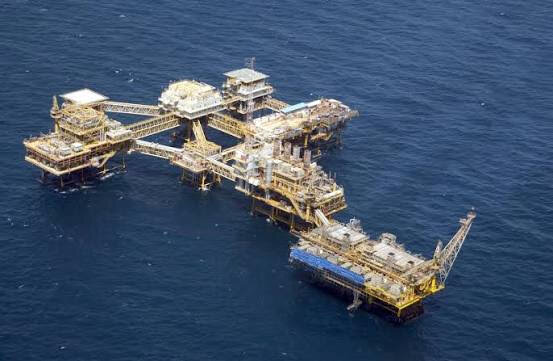
TEHRAN- The project to maintain oil production, collect associated gases, and develop gas transmission infrastructure at the shared Salman Field is underway.
According to Mehr News Agency, citing the National Iranian Oil Company, the shared Salman Field is located in the Lavan area. Due to its advanced age, it is in the second half of its reservoir life, and for years oil production from this field has not occurred naturally. To maintain and continue production, gas lift to the wells is essential.
According to the design, the high-pressure gas needed for injection was supposed to be supplied by turbo-compressors installed on the platform (Solar Mars 90). However, due to the foreign type and model and the old age of this equipment, as well as problems caused by sanctions, the supply of parts and their repair, gas lift has faced serious limitations. Therefore, inevitably, and in order to prevent a decline in oil production from the shared Salman oil field, high-pressure gas from the Salman gas field has been used in recent years for gas lift and to enable oil production from this shared field.
On this basis, from Iranian year 1385 (began on March 21, 2016) to the end of Mordad 1405 (October 20, 2026) by injecting gas from the Salman gas field into its oil field, more than $21.5 billion has been earned by the country from oil production at this field, which has a much higher added value compared with the gas of this field. Also, in the two years since the 14th administration began, revenue equivalent to $1.2 billion has been obtained for the country from this field.
On the other hand, given the importance of maintaining oil production from a shared field, using the available high-pressure gas for injection into the wells of this field has been a rational, economic, and conservation-oriented solution for continued production. In the Salman Field, water injection into the reservoir is also very important in addition to gas lift. Fortunately, with the installation and commissioning of a turbo-generator, after a long time, water injection by the main injection pumps, in addition to the current booster pumps, will become possible.
However, with the efforts of headquarters units and the support of the National Iranian Oil Company, important measures for collecting Salman’s associated gases have begun, and a draft contract with one of the domestic petrochemical companies has been prepared and will be signed soon. Under this contract, while modernizing the equipment needed for the gas lift process of the Salman oil platform, the field’s associated gases will gradually be collected. In addition, with the credit adjustment, the supply and purchase of the needed turbines is currently being pursued simultaneously and is in its final stages.
Also, the 30-inch Salman gas pipeline to Siri Island, about 150 kilometers long, is ready for operation and there is no problem along this route. In addition, a plan to construct a new pipeline has been defined. Due to the special specifications and characteristics of the pipes required for this project and the impossibility of producing these pipes domestically, the entire requirement of 52,000 tons has been ordered from China. So far, about 20,000 tons, equivalent to 30 percent of the project’s needs, has been produced. The first cargo weighing 3,800 tons and the second cargo weighing 4,239 tons, totaling 8,039 tons, have entered the country and are with the contractor at the Mahshahr yard. Also, 10,655 tons of pipe is being cleared from Imam Khomeini Port customs, and 1,525 tons is ready for loading from a Chinese port to Iran.
The 32-inch gas transmission pipeline from Siri Island to Assaluyeh, approximately 315 kilometers long, was also built with the aim of transferring 500 million cubic feet per day of sour gas from the Salman Field to the Fourth Refinery of Assaluyeh. After numerous problems in dewatering, cleaning, and drying the line, pre-commissioning and commissioning operations were successfully carried out in 1395, and operation of the line began. However, this pipeline suffered a complete rupture near Siri Island on 26 Mordad 1402. After the stages of preparing the scope of work, securing funding, and tendering, repair and recommissioning operations were assigned to the contractor from 10 Shahrivar 1403.
During project execution, the contractor prepared from Esfand 1404 to conduct ROV Survey operations and identify the condition of the pigs at the damage site. However, with the start of the imposed Ramadan war on 9 Esfand 1404, the offshore and onshore activities of this project were halted. In Ordibehesht of the current year, the diving vessel “Diana” was dispatched, and the pigs and temporary spools were recovered from the seabed. But given the great depth and complexity of the damage site, installing the repair spool requires saturation diving and a foreign team. Due to risks arising from security conditions, the possibility of emergency situations, and disruptions of communications and GPS, it has not yet been possible to deploy this team.
According to the current plan, if there is no renewed leakage and conditions are provided for saturation diving operations, it is expected that this pipeline will be ready for commissioning and gas injection within about the next 6 months.
Therefore, activities in the Salman Field have not only not stopped, but the Iranian Offshore Oil Company is simultaneously pursuing the maintenance of oil production, the collection of associated gases, and the completion of the gas transmission infrastructure of this field.
MA
Leave a Comment